Partnering for innovation at Fermilab
The Genesis Mission is a transformative national initiative leveraging artificial intelligence to accelerate scientific discovery and innovation.
Fermilab, a key player in this effort, is uniquely positioned to drive progress through its expertise in high-energy physics, advanced computing and AI-powered research. Through collaborative projects, Fermilab researchers tackle some of the most complex challenges in science and technology.
Explore the exciting opportunities that are shaping the future of AI-driven research and pushing the boundaries of discovery at Fermilab:
Model and seed teams | American Science Cloud | High-energy physics pilots
Model and seed teams
AXESS – Accelerating eXtreme Environment Specs-to-Silicon
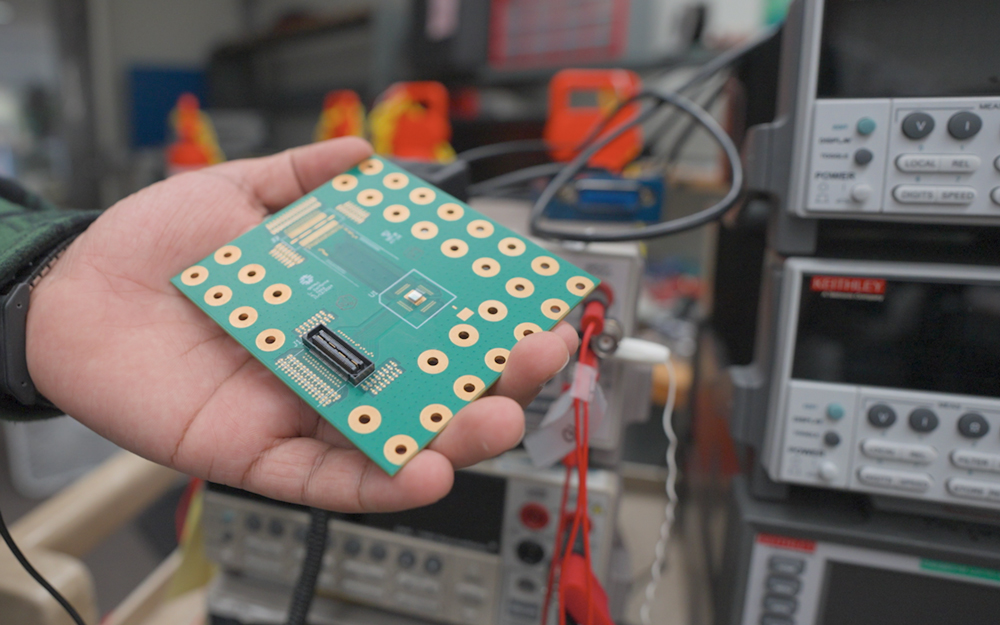
Researchers at the U.S. Department of Energy’s national laboratories, in partnership with industry, are developing an AI-driven ecosystem that is revolutionizing custom chip design for critical scientific applications. The system compresses the chip-creation process from months to just minutes, enabling designs tailored for extreme conditions like cryogenic temperatures, high-radiation and ultra-fast environments. These advancements are vital for applications such as quantum computing, fusion energy and particle physics.
Impact: Leveraging DOE’s unique facilities and data, this platform will deliver robust, reliable devices and strengthen U.S. leadership in next-generation microelectronics — significantly reducing engineering hours while boosting innovation and national competitiveness.
MOAT – Multi-Office particle Accelerator Team
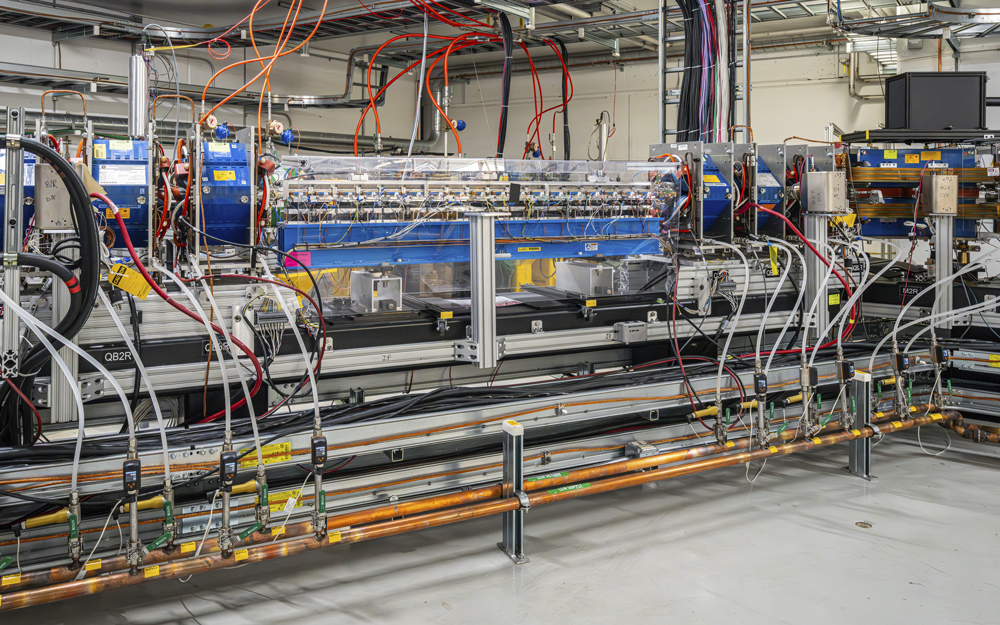
The Multi-Office Accelerator Team is a collaborative effort among seven U.S. national laboratories that uses artificial intelligence to advance particle accelerator science. MOAT’s shared AI ecosystem supports operations, design, training, and research and development, addressing the growing need for AI-assisted modeling, predictive maintenance and increasingly automated operations.
Impact: This initiative improves performance, reliability and efficiency while fostering opportunities for students to contribute to AI development. Beyond scientific advancements, MOAT reduces operational costs and commissioning timelines, expanding access to accelerator technologies and their benefits beyond national laboratories.
American Science Cloud
Fermi Data Platform
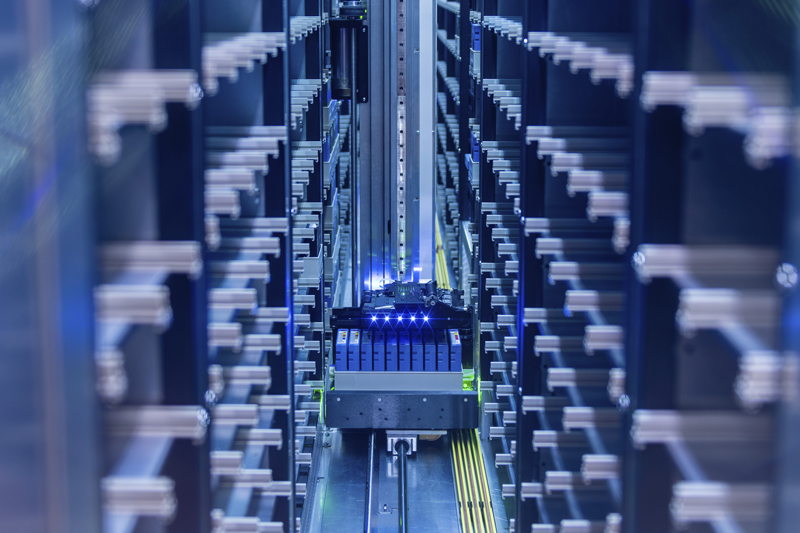
The Fermi Data Platform, or FDP, provides a high-capacity infrastructure for storing, managing and sharing scientific data within the American Science Cloud.
The platform offers data access through WebDAV and XRootD protocols, with Globus file transfer support coming soon, and uses metadata synchronized with the global AmSC catalog.
Impact: FDP is supporting the data needs of high-energy physics AI applications and is expanding to serve data from across the DOE complex. It is part of the AmSC infrastructure empowering researchers with the tools they need to accelerate discovery.
LQCD infrastructure partner
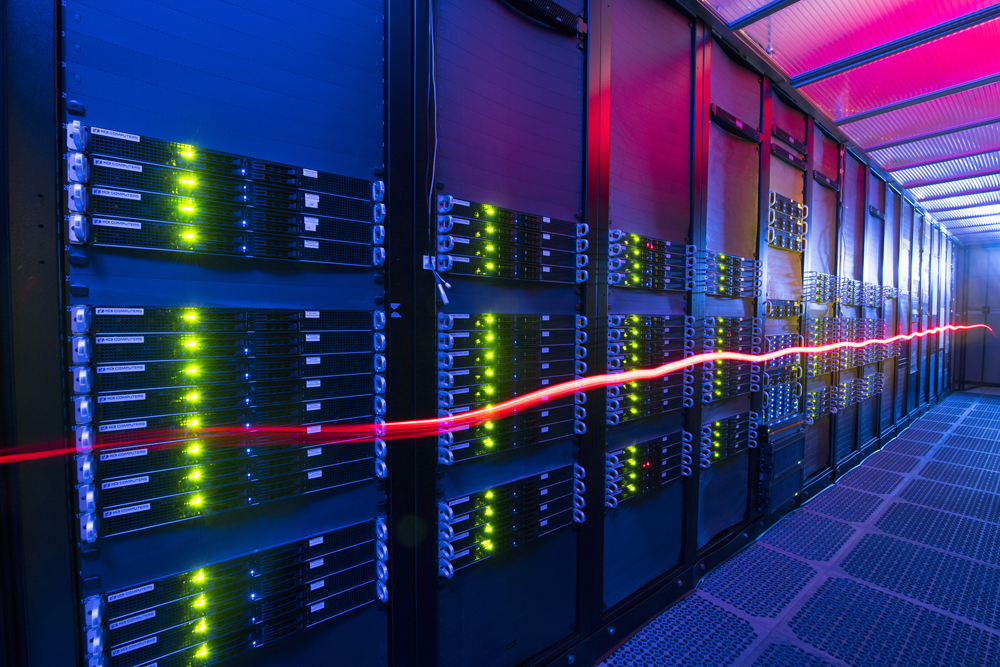
Lattice Quantum Chromodynamics at Fermilab uses high‑performance computing to simulate the behavior of protons, nuclei, and other particles made of quarks and gluons directly from the Standard Model.
The project is developing an agentic AI infrastructure to automate workflows, accelerate calculations, and uncover new patterns as simulations grow more complex.
Impact: This multi-laboratory effort, known as FemtoMind, has the goal of advancing the understanding of the femtoscale — the realm of proton-sized particles.
Scientific User Facilities
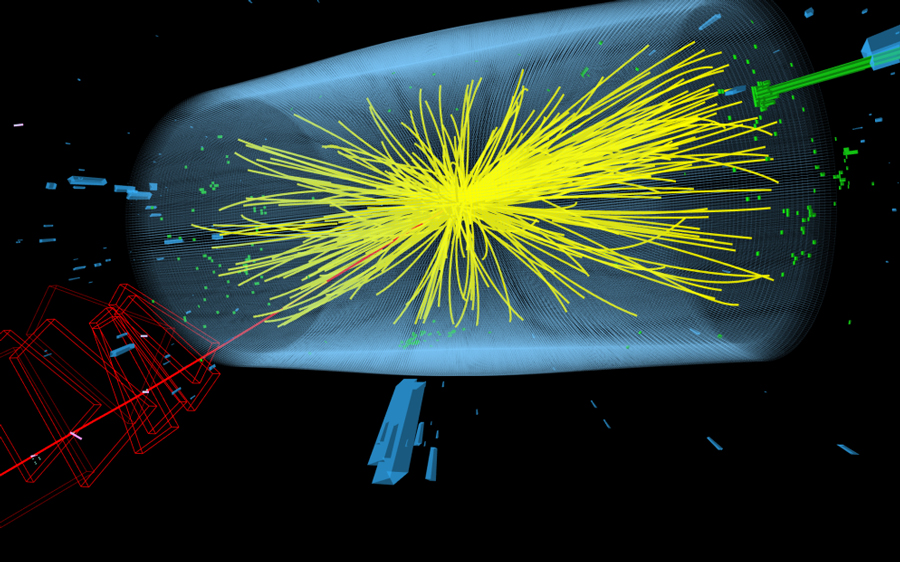
The Scientific User Facilities project advances AI-driven data analysis for high-energy and nuclear physics through the American Science Cloud Infrastructure Partnership.
By using a distributed Inference-as-a-Service model, it supports modern scientific workflows that rely on multiple machine-learning models, improving scalability and performance for experiments at the Large Hadron Collider and at Fermilab’s MicroBooNE and DUNE.
Built on the SuperSONIC orchestration framework, the project demonstrate real scientific workflows across DOE high-performance computing facilities and commercial cloud platforms while evaluating performance metrics like latency, throughput, and resource efficiency.
Impact: This effort lays the foundation for a federated, production-ready IaaS ecosystem and provides hands-on training for students and early-career researchers, fostering the next generation of AI and data science experts.

High-energy physics pilots
TREASURE – Tokenized Representations for Energy-frontier AI Searches via Understanding and REasoning
The TREASURE project addresses a central challenge in AI‑driven discovery for high‑energy physics: today’s collider experiments produce exabytes of data in formats that are not always compatible across detectors and collaborations.
This multi-laboratory initiative converts massive, heterogeneous datasets into AI‑ready, tokenized representations, enabling cross-experiment learning and scientific discoveries.
TREASURE will produce curated, encoded libraries of particle‑collision data from the Large Hadron Collider and from past and future collider facilities, including the Tevatron. It will also explore new physics-guided methods to train foundation models on these datasets.
Impact: TREASURE will increase sensitivity to key physics parameters and enhance searches for physics beyond the Standard Model. The cross-experiment data representations, tokenization schemes, and foundation model approaches developed by TREASURE will provide a roadmap for other scientific domains.
AI Universe
As AI models are transforming astronomy, scientists need reliable ways to measure how confident these predictions are. This project applies advanced uncertainty quantification methods to AION-1, a state-of-the-art AI model trained on over 200 million astronomical observations, integrating imaging, spectroscopic and scalar data from five major surveys.
The research implements two complementary approaches to measure prediction confidence: one tailored for estimating properties of galaxies and stars, and another for classifying galaxy shapes and morphologies.
Impact: This framework is broadly applicable beyond astronomy, offering a powerful tool for adding reliable uncertainty estimates to any large AI model used in scientific research.

HEP Knowledge Extraction
The Knowledge Extraction pilot, part of the high-energy physics American Science Cloud Intelligent Data Activity, is developing AI tools to turn research materials — such as papers, data, code and models — into organized and trustworthy knowledge. These AI agents can plan tasks, use scientific software, verify results and collaborate alongside human experts.
The project focuses on key challenges like cleaning and organizing data, reducing bias, verifying results and uncertainty assessment. Its multi-agent approach integrates different scientific tools and information sources to support accurate and reliable research.
Impact: The pilot will introduce agents that support software development, read and analyze scientific literature, run simulations and assist with theoretical studies. At Fermilab, the focus is on agents that work with particle‑physics simulations and dark‑matter searches in cosmological surveys.